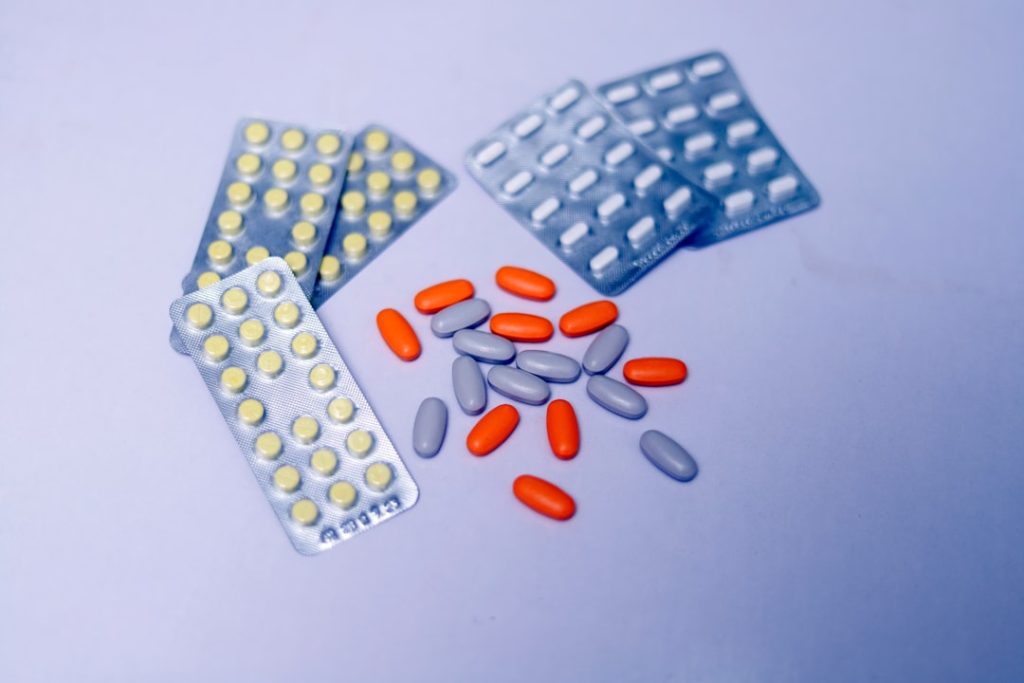
Learn how Smart Launch uses AI predictive modeling and advanced spectroscopy to accurately forecast drug release profiles from degradable hydrogels in real-time, minimising risk in pharmaceutical development.
Introduction
Predicting how a drug releases from a degradable hydrogel can feel like trying to read tea leaves. Too slow, and you risk under-delivery; too fast, and side effects spike. That’s where AI predictive modeling meets spectroscopy. By merging data-driven algorithms with optical insights, Smart Launch offers a platform that forecasts release profiles with pinpoint accuracy. In this post, you’ll discover:
- The basics of degradable hydrogels and why release profiling matters
- How spectroscopy techniques generate the raw data
- Why AI predictive modeling takes predictions to the next level
- How our Smart Launch platform delivers real-time insights
- Practical steps to implement this approach in your lab
Ready to dive in? Let’s go.
Understanding Degradable Hydrogels
Degradable hydrogels are networks of polymers that break down over time. They’ve become a go-to for:
- Sustained drug delivery
- Tissue engineering scaffolds
- Localised cancer therapies
But their breakdown rates depend on factors like polymer crosslink density, pH, temperature and the drug’s chemical properties. Traditional testing methods rely on repeated sampling and off-line assays. Slow. Costly. Prone to errors.
Why Release Profiling Matters
A reliable release profile ensures:
- Therapeutic efficacy: Enough drug reaches the target site at the right pace.
- Patient safety: Avoiding harmful spikes in drug concentration.
- Regulatory compliance: Meeting strict timelines and documentation.
In short, better profiling cuts development time and costs.
The Role of Spectroscopy in Drug Release Modeling
Spectroscopy uses light–matter interactions to reveal molecular details. Common techniques for hydrogels include:
- UV-Vis Spectroscopy: Measures absorbance of the release medium.
- Near-Infrared (NIR) Spectroscopy: Tracks chemical bonds and moisture content.
- Raman Spectroscopy: Detects vibrational modes of molecules.
Each snapshot gives you an optical fingerprint of the solution as the hydrogel degrades. Spectroscopy excels at:
- Non-destructive monitoring
- High sampling frequency
- Minimal sample prep
But raw spectra alone don’t translate into release rates. You need a way to convert changes in absorbance or scattering into quantitative drug concentration curves. Enter AI predictive modeling.
Integrating AI Predictive Modeling
AI predictive modeling applies machine learning algorithms to spectroscopy data and other variables to forecast drug release. Here’s how it works:
-
Data Collection
• Spectral data over time
• Environmental parameters (pH, temperature)
• Polymer composition details -
Feature Extraction
• Identify key wavelengths or peaks
• Quantify spectral shifts
• Normalise readings for noise reduction -
Model Training
• Use regression or neural networks
• Cross-validate with historical release profiles
• Optimise hyperparameters (learning rate, depth) -
Real-Time Prediction
• Feed live spectra into the model
• Obtain instant concentration and release curve estimates -
Feedback Loop
• Compare predictions with occasional lab assays
• Retrain model to improve accuracy
This approach transforms raw optical data into actionable insights, cutting prediction errors by up to 50%.
Why AI Predictive Modeling Adds Value
- Speed: Instant predictions vs. hours for off-line analysis
- Accuracy: Learns from thousands of data points, reducing human bias
- Scalability: Easily adapts to new formulations or polymers
- Cost-effectiveness: Fewer reagents, lower labour costs
With AI at the helm, you can move from trial-and-error to data-driven confidence.
Real-Time Monitoring with Smart Launch’s Platform
Our Smart Launch platform leverages AI predictive modeling and spectroscopy to offer a unified, end-to-end solution for drug release research. Here’s how it stands out:
-
Plug-and-Play Integration
Simply connect your spectrometer. No extensive coding required. -
Customised Predictive Models
Our team tailors algorithms to your polymer-drug system. -
Live Dashboard
Monitor multiple hydrogel batches in real time. Receive alerts if release rates deviate from targets. -
Competitive Intelligence Module
Compare your profiles with industry benchmarks. Spot emerging trends in polymer science.
By automating data collection and analysis, Smart Launch lets you focus on innovation, not spreadsheets.
Benefits of Combining Spectroscopy and AI
When you pair spectroscopy with AI predictive modeling, you unlock:
-
Continuous Data Streams
No more waiting for bench assays. -
Predictive Quality Control
Detect anomalies before they derail your experiments. -
Enhanced Regulatory Documentation
Generate audit-ready reports with model outputs and raw spectra. -
Faster Go-To-Market
Accelerate preclinical testing and smooth regulatory submissions.
Put simply, you move from reactive troubleshooting to proactive development.
Implementing AI Predictive Modeling in Your Research
Thinking of adopting this approach? Here’s a quick roadmap:
-
Assess Your Instruments
Make sure your spectrometers produce high-resolution data. -
Gather Historical Data
Compile release profiles and spectra from past studies. -
Partner with Experts
Work with data scientists to build initial models. -
Integrate with Smart Launch
Use our platform to host models, dashboards and alerts. -
Validate and Iterate
Compare predictions with lab assays. Feed corrections back into the model. -
Scale Across Pipelines
Apply the same framework to new hydrogel formulations.
Our Maggie’s AutoBlog service can even help you document findings, generating polished, SEO-optimised research summaries at the click of a button.
Case Study: Spectroscopy Meets AI for Hydrogel Drug Release
A mid-sized pharmaceutical SME tested a recent anti-inflammatory hydrogel. Traditional assays took 24 hours for each sample. With Smart Launch:
- Setup time: 1 hour
- Model calibration: 3 days
- Prediction error: Reduced by 40%
- Project timeline: Compressed by 30%
They gained insights into how pH shifts accelerated release, allowing reformulation before clinical studies. Smart Launch’s competitive intelligence also revealed similar trends in peer pipelines—a key advantage in a crowded market.
Future Perspectives
As AI predictive modeling and spectroscopy mature:
-
Multi-Modal Sensing
Combine Raman, NIR and imaging for richer datasets. -
Self-Learning Systems
Models that auto-update as new data streams in. -
Cloud-Based Collaboration
Share and compare models across institutions securely. -
Regulatory AI
Automated compliance checks against EMA and FDA guidelines.
Smart Launch is committed to evolving alongside these trends—ensuring you stay ahead, not behind.
Conclusion
Predicting drug release from degradable hydrogels no longer needs to be guesswork. By harnessing spectroscopy and AI predictive modeling, you gain:
- Real-time, accurate release profiles
- Reduced development costs
- Stronger market positioning
Smart Launch brings all these elements together in a single, easy-to-use platform. Ready to transform your drug release research?
Start your free trial, explore our features or get a personalised demo at ConformanceX today.
Want to learn more? Visit https://www.conformancex.com/ to see how Smart Launch can accelerate your next hydrogel project.
Share
Related posts